| Sign In | Join Free | My ledscreensign.com |
|
| Sign In | Join Free | My ledscreensign.com |
|
| Categories | Resistance Wire |
|---|---|
| Brand Name: | DLX |
| Model Number: | Nichrome Wire Cr20Ni80 |
| Certification: | Ce,Rohs |
| Place of Origin: | China,Jiangsu |
| MOQ: | 10kg |
| Payment Terms: | L/C,D/A,D/P,T/T,Western Union |
| Supply Ability: | 500 tons per month |
| Delivery Time: | 7-10 work days |
| Company Info. |
| Changzhou DLX Alloy Co., Ltd. |
| Verified Supplier |
| View Contact Details |
| Product List |

In the pursuit of clean, sustainable energy solutions, hydrogen stands out as a key element in the global shift toward a green energy future. Water splitting—a process that uses electricity to break water molecules into hydrogen and oxygen—has gained traction as one of the most efficient and environmentally friendly methods for hydrogen production. At the heart of this process is the material used in the electrolysis cell electrodes. Cr20Ni80 Resistance Wire, composed of 20% chromium and 80% nickel, has proven to be a superior material for this task due to its outstanding electrical properties, corrosion resistance, and high-temperature stability.
At DLX, we offer High-Performance Cr20Ni80 Resistance Wire, specifically designed to meet the demanding requirements of hydrogen generation through water splitting. Whether for industrial-scale electrolyzers or cutting-edge research projects, our Cr20Ni80 wire is engineered for maximum efficiency, durability, and performance in electrolysis applications.
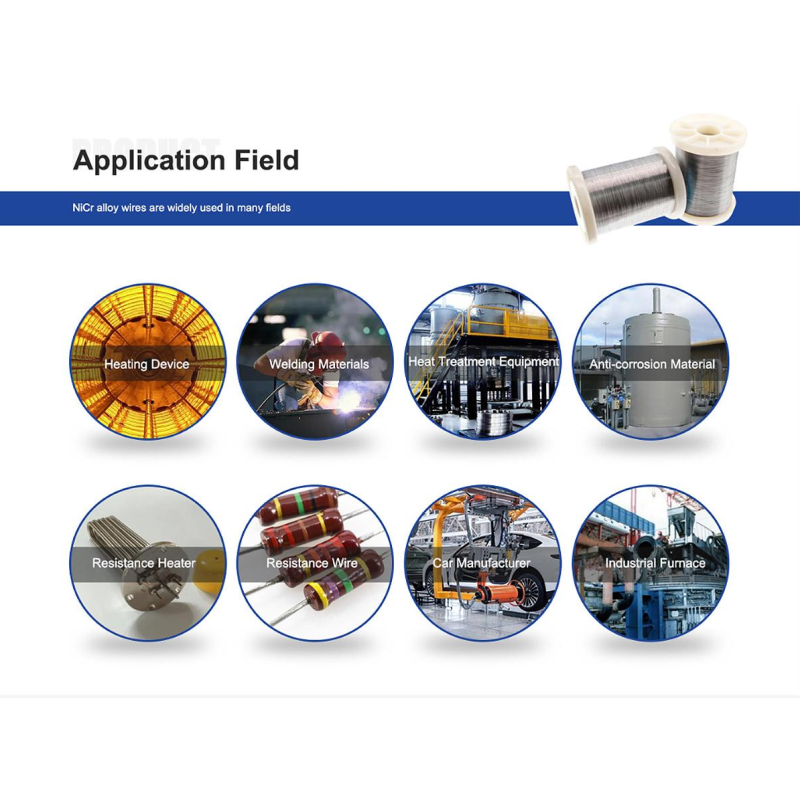
The Cr20Ni80 Resistance Wire is a high-quality alloy made from 20% chromium and 80% nickel. It combines exceptional electrical conductivity with impressive resistance to corrosion, even in harsh electrolytic environments. This makes it the perfect material for water electrolysis, where electrodes are subjected to high current, extreme temperatures, and corrosive electrolytes.
The wire's high melting point and robust mechanical properties ensure that it can withstand the demanding conditions found in large-scale hydrogen production systems. By ensuring reliable electrical conductivity and reducing energy loss, Cr20Ni80 Resistance Wire helps to optimize the hydrogen production process, making it a critical component of the electrolyzer setup.
At DLX, we specialize in delivering Cr20Ni80 Resistance Wire with customizable specifications to suit your project's specific requirements. Whether you are scaling up your hydrogen production or conducting experimental research, our wire delivers exceptional performance and longevity.
| Performance material | Cr10Ni90 | Cr20Ni80 | Cr30Ni70 | Cr15Ni60 | Cr20Ni35 | Cr20Ni30 |
|---|---|---|---|---|---|---|
| Composition Ni | 90 | Rest | Rest | 55.0~61.0 | 34.0~37.0 | 30.0~34.0 |
| Composition Cr | 10 | 20.0~23.0 | 28.0~31.0 | 15.0~18.0 | 18.0~21.0 | 18.0~21.0 |
| Composition Fe | ≤1.0 | ≤1.0 | Rest | Rest | Rest | |
| Maximum temperature ℃ | 1300 | 1200 | 1250 | 1150 | 1100 | 1100 |
| Melting point ℃ | 1400 | 1400 | 1380 | 1390 | 1390 | 1390 |
| Density g/cm³ | 8.7 | 8.4 | 8.1 | 8.2 | 7.9 | 7.9 |
| Resistivity(μΩ*m,20℃) | 1.09±0.05 | 1.18±0.05 | 1.12±0.05 | 1.00±0.05 | 1.04±0.05 | |
| Elongation at rupture | ≥20 | ≥20 | ≥20 | ≥20 | ≥20 | ≥20 |
| Specific heat(J/g.℃) | 0.44 | 0.44 | 0.44 | 0.44 | 0.44 | 0.44 |
| Thermal conductivity(KJ/m.h℃) | 60.3 | 45.2 | 45.2 | 43.8 | 43.8 | |
| Coefficient of linear expansion (20~1000℃) | 18 | 17 | 17 | 19 | 19 | |
| Micrographic structure | Austenite | Austenite | Austenite | Austenite | Austenite | |
| Magnetic properties | Nonmagnetic | Nonmagnetic | Nonmagnetic | Nonmagnetic | Nonmagnetic |

As the world transitions to clean and sustainable energy, hydrogen is seen as one of the most promising solutions for decarbonizing multiple sectors, including transportation, energy, and industrial processes. Among the various hydrogen production technologies, water electrolysis is particularly attractive because it produces hydrogen with zero carbon emissions when powered by renewable energy sources.
As the demand for green hydrogen grows, so does the need for efficient and reliable electrolysis systems. Electrolysis technologies, including alkaline electrolysis and PEM electrolysis, are rapidly evolving, and the materials used in these systems play a crucial role in their efficiency and longevity. Cr20Ni80 Resistance Wire is poised to become a key material for the hydrogen economy, as its exceptional performance characteristics make it ideal for these demanding applications.
With government and industry support for hydrogen infrastructure expanding, the need for high-quality, durable materials like Cr20Ni80 Resistance Wire will continue to increase. By choosing DLX as your supplier, you ensure that your electrolysis systems are built with the best materials for long-term success.

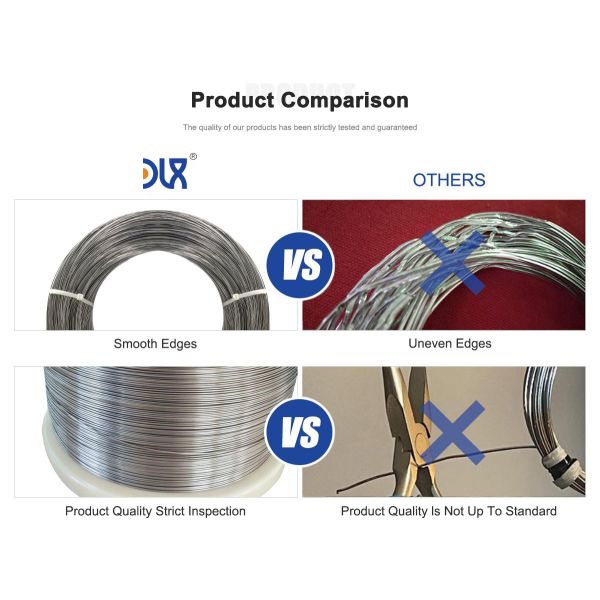
DLX's Cr20Ni80 Resistance Wire is the optimal choice for ensuring that your hydrogen production systems operate at peak efficiency. Our wire combines outstanding durability, excellent conductivity, and resistance to corrosion, ensuring that your electrolyzers run smoothly for years to come. Whether you're involved in large-scale industrial production or groundbreaking research, DLX is your partner for high-performance materials.



|
 Cr10Ni90 Nichrome Wire for Sustainable Hydrogen Generation via Electrolysis
Durable Cr10Ni90 Wire for Large-Scale Electrolytic Hydrogen Production
Cr20Ni80 Nichrome Wire for Reliable Hydrogen Electrolysis Applications
Cr20Ni80 Alloy Wire for Optimal Electrolytic Hydrogen Production
Long-Lasting Cr20Ni80 Nichrome Wire for Efficient Electrolysis Systems
Cr20Ni80 Wire for Electrolytic Hydrogen Production in Renewable Energy Solutions
Cr30Ni70 Nichrome Wire for Efficient Hydrogen Production in Electrolysis
Cr30Ni70 Alloy Wire for Cost-Effective Electrolytic Hydrogen Generation
Reliable Cr30Ni70 Resistance Wire for Water Electrolysis Systems
Cr30Ni70 Wire for High-Efficiency Electrolysis and Hydrogen Generation
Cr10Ni90 Nichrome Wire for Sustainable Hydrogen Generation via Electrolysis
Durable Cr10Ni90 Wire for Large-Scale Electrolytic Hydrogen Production
Cr20Ni80 Nichrome Wire for Reliable Hydrogen Electrolysis Applications
Cr20Ni80 Alloy Wire for Optimal Electrolytic Hydrogen Production
Long-Lasting Cr20Ni80 Nichrome Wire for Efficient Electrolysis Systems
Cr20Ni80 Wire for Electrolytic Hydrogen Production in Renewable Energy Solutions
Cr30Ni70 Nichrome Wire for Efficient Hydrogen Production in Electrolysis
Cr30Ni70 Alloy Wire for Cost-Effective Electrolytic Hydrogen Generation
Reliable Cr30Ni70 Resistance Wire for Water Electrolysis Systems
Cr30Ni70 Wire for High-Efficiency Electrolysis and Hydrogen Generation

